

 Photo: Archie Dixon in the gym at the Tasmanian Institute of Sport
Archie Dixon’s inspirational transformation from late developer to multiple national record-holder has highlighted Tasmania’s abundant but dormant Paralympic potential.
Unable to walk or even crawl until he was two, Dixon could not feed himself and had to communicate through an iPad before embarking on an athletics journey which has since yielded a host of Australian titles.
Embracing the support of the Tasmanian Institute of Sport’s new Para Unit, the 15-year-old mirrored the methods of recently retired Olympic swimming champion Ariarne Titmus by sending a message back in time to himself.
“If I could talk to my younger self I would say: there is a pathway for you, you have to keep fighting,” Dixon said. “Believe in yourself because you will get to a good place and will be happy where you’re going. Hard work will pay off and you will fit in.”
Since being classified as T38 (mild cerebral palsy), Dixon has catapulted himself into the Paralympic picture by claiming two golds and a silver medal at track and field national championships, another victory at cross-country nationals and establishing Australian age-group records across the 200, 400, 800 and 1500m.
Parents Matt and Kel said Dixon was slow to reach developmental milestones and had to be syringe-fed until 10 months because he could not use the muscles in his mouth.
“He was not engaging, sitting up, rolling or crawling,” Kel said. “We called him Thumper because he would lay on his back and thump his feet on the ground.”
Autism and deafness were both considered but dismissed as Dixon underwent extensive tests along with prolonged speech and occupational therapy before being diagnosed with apraxia and dyspraxia at age seven.
With both parents being PE teachers, sport was encouraged and Dixon tried soccer, hockey, basketball and football but found his calling at Clarence Little Athletics.
“Athletics helped me because it was an individual sport and I could do my thing and not disappoint my team,” he explained.
Kel added: “Archie could see disappointment on teammates’ faces when he accidentally made mistakes and felt like he was letting them down. But because little athletics has such a focus on your own performance, Archie was getting new PBs every week and so much self-worth which made him feel really good. Suddenly he started getting competitive with able-bodied people but we had no exposure in Tasmania with classified competition so it was hard for Archie to see that there was a direction for him.”
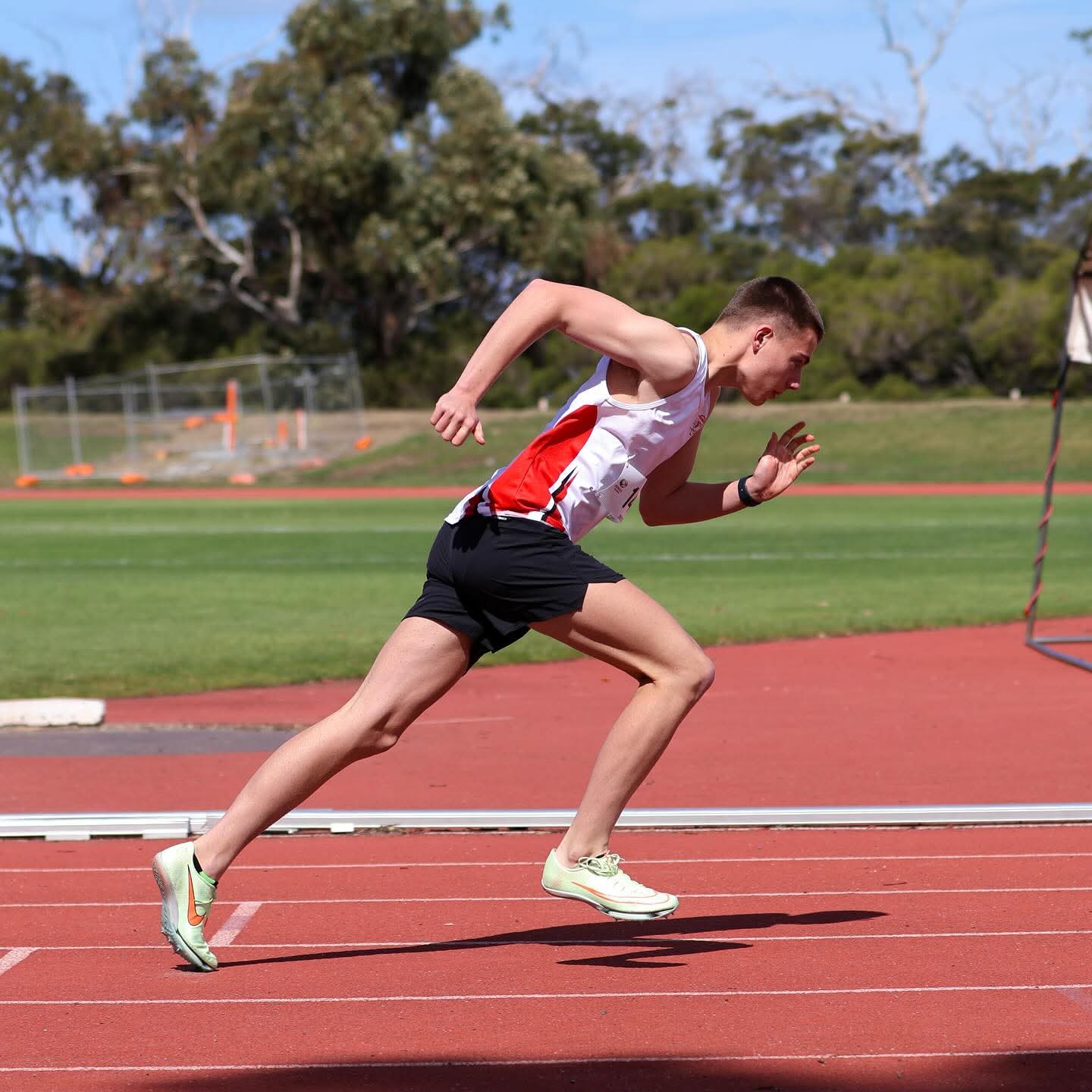
Photo: Archie competing at local interclub athletics meet
Born in Launceston and moving to Hobart aged one, Dixon attended Bellerive Primary, Sacred Heart, St Virgil’s and Friends schools but it was during a two-year spell at Daramalan College in ACT that his sporting horizons broadened.
Athletics coach Rowan Vergano, training out of the Australian Institute of Sport, introduced Dixon to para competition and a national training camp on the Gold Coast helped highlight his potential pathway.
“I was enjoying athletics in Tasmania and finding myself but when we moved to the mainland then I had opportunities with other para-athletes and I was competitive,” Dixon said.
“I could see they were at my level and it helped me understand that I could go somewhere with this. The para-athletes, parents and coaches are such a beautiful community. It is competitive but you all want the best for each other.”
Matt added: “If it had not been for going to Canberra we would not be here now. Nobody had really shown any interest in Archie, but we knew that he had potential and was ticking boxes with reaching milestones. He was starting to get Australian records.”
“If the Para Unit had been in existence back when he was about 13, I reckon he would have been identified and picked up earlier. So, it’s fantastic that it’s here now and the government is putting money into it.”
Dixon is the youngest scholarship-holder in the TIS Para Unit which was established in October under the leadership of Dr Kirstie Turner.
“Archie has a fantastic story to tell,” she said. “He has come through so much to get to this point but is such a happy-go-lucky human being and his story is so inspiring. I think he’s a really exciting prospect.”
Now combining athletics with school and a part-time job, Dixon is targeting National All-Schools Championships in Melbourne in December, track and field nationals in Brisbane next April and Oceania Games in Darwin in 2026 but is already looking further afield.
“I’m trying to get to the 2032 Paralympics - that’s my big goal,” he said. “I enjoy the sport and the community and the support. Just to know that I can go to school, go to work, go to training, go to the gym by myself when before I couldn’t even eat by myself and had to talk to people through an iPad.”
“The Para Unit is such a good opportunity for me and others in Tasmania. The TIS is letting us use their facilities, giving us the opportunity to travel and showing us that there is a pathway. It’s such a great help.”
Matt added: “Someone who sat on the floor for the first 18 months of his life now has this TIS scholarship, he’s working and saving and really motivated to do things.”
Furthermore, Dixon may also have a sideline as a 400m coach if his explanation of his preferred distance is any guide.
“In the 1500m you have to manage your speed and be smart about it or you’ll get to the last lap and you’ve got nothing left but the 400m is a sprint so you’re like: it’s only one lap, let’s just get this over and done with.”
Written by Rob Shaw