

A team of five driven Tasmanian athletes have joined forces with like-minded mainlanders in what they hope may be a first step towards becoming a Paralympian.
The inaugural Libby Kosmala Para Futures Cup united 70 emerging Para athletes from every state and territory to compete across 12 sports in Canberra.
Held at the Australian Institute of Sport across four days in early October, the initiative sought to provide a multi-sport competition experience that develops participants’ readiness for high-performance sport.
The event brought together athletes aged 13 to 32 who had been identified through Para Sport Units with Tasmanians Mia Halliday, Stephanie Pope, Emma Barnett, Jesse Lawson and Tom Prince partnering with Victoria to form Team South.
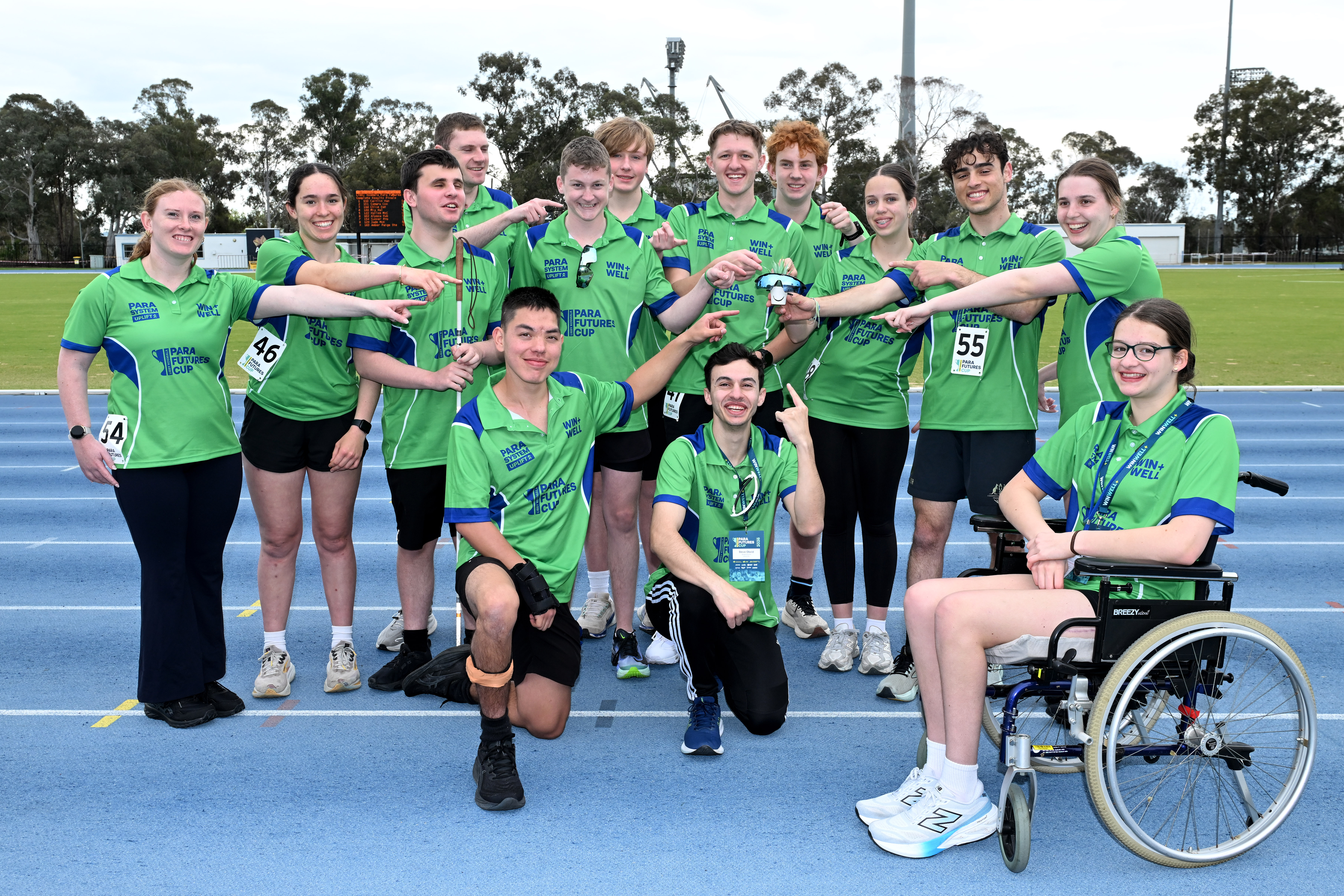
Image: Team South athletes enjoying team photos at the end of competition Image Credit: Jeff Crow/Paralympics Australia
“It was really fun and nice to try new sports,” said 13-year-old Stephanie.
“There was a large range of sports and it was really competitive between all the teams. I have a feeling there will be a fair few of the people from the cup going to Paralympics and maybe even doing more than one sport.”
Named in honour of shooting great Libby Kosmala, who represented Australia at 12 Paralympic Games and won nine gold medals, the event served as a pilot for a potential series of multi-sport competitions leading into the 2032 Paralympic Games in Brisbane.
An official opening ceremony was hosted by AIS Para Unit System Lead and four-time Winter Paralympian Mitch Gourley and involved Kieren Perkins, Australian Sports Commission Chief Executive Officer and two-time Olympic swimming champion, telling the athletes: “This event has been created for you.”
He added: “Compete fiercely. Support your teammates. Ask questions. Learn from coaches and other athletes around you and be proud that you’re the very first competitors in the inaugural Para Futures Cup.”
Tasmania’s athlete mentor was rower Ella Marshall who had been in the Tasmanian Institute of Sport Para Unit a year earlier and has since become its first international medallist.
“The number of opportunities and experiences it provided was truly amazing and it was great to see how much effort and dedication each athlete put into every sport.” she said.
“It is an incredibly important event because it builds exposure and awareness of the Paralympic sports as well as anticipation for the upcoming Games.”
“Team South was the smallest team in attendance but that did not stop each athlete putting their best foot forward. It was great to see TIS values well and truly flow and be upheld by our athletes. They did an incredible job.”
Organised by the AIS and Paralympics Australia, the Para Futures Cup is part of the Para Uplift movement which seeks to remove barriers to high-performance sport and provide elite environments needed to succeed on the road to Brisbane 2032 and beyond.
TIS Para Unit Lead Kirstie Turner said it ultimately helps strengthen the competitive pathway for Tasmanian Para athletes.
“This event provides an opportunity for our young Para athletes, at the very beginning of their sporting pathway, to experience Para-specific competition across multiple sports,” Turner said.
“As part of this event they learn how to travel for competition, be a part of educational opportunities such as nutrition and media training, receive mentoring from current Australian high-performance athletes, experience an opening ceremony, and meet and compete against other Para athletes from across Australia.”
Stephanie, who was diagnosed with Paraspinal Neuroblastoma as a five-month-old but has since become a multiple state champion as an S10 swimmer, said the Para Futures Cup had been a major personal goal after undergoing multi-level surgery aimed at straightening her skeletal system in April.
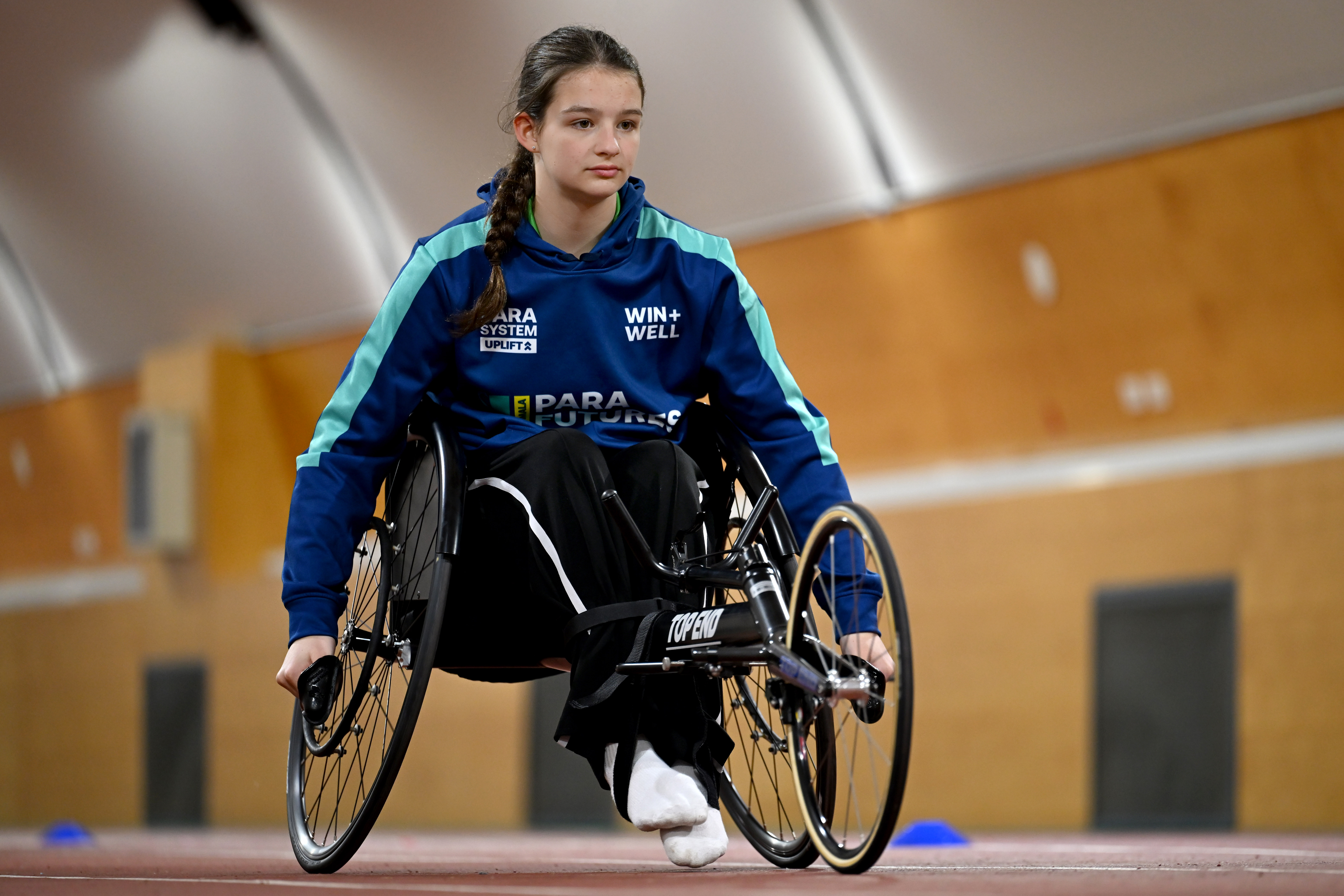
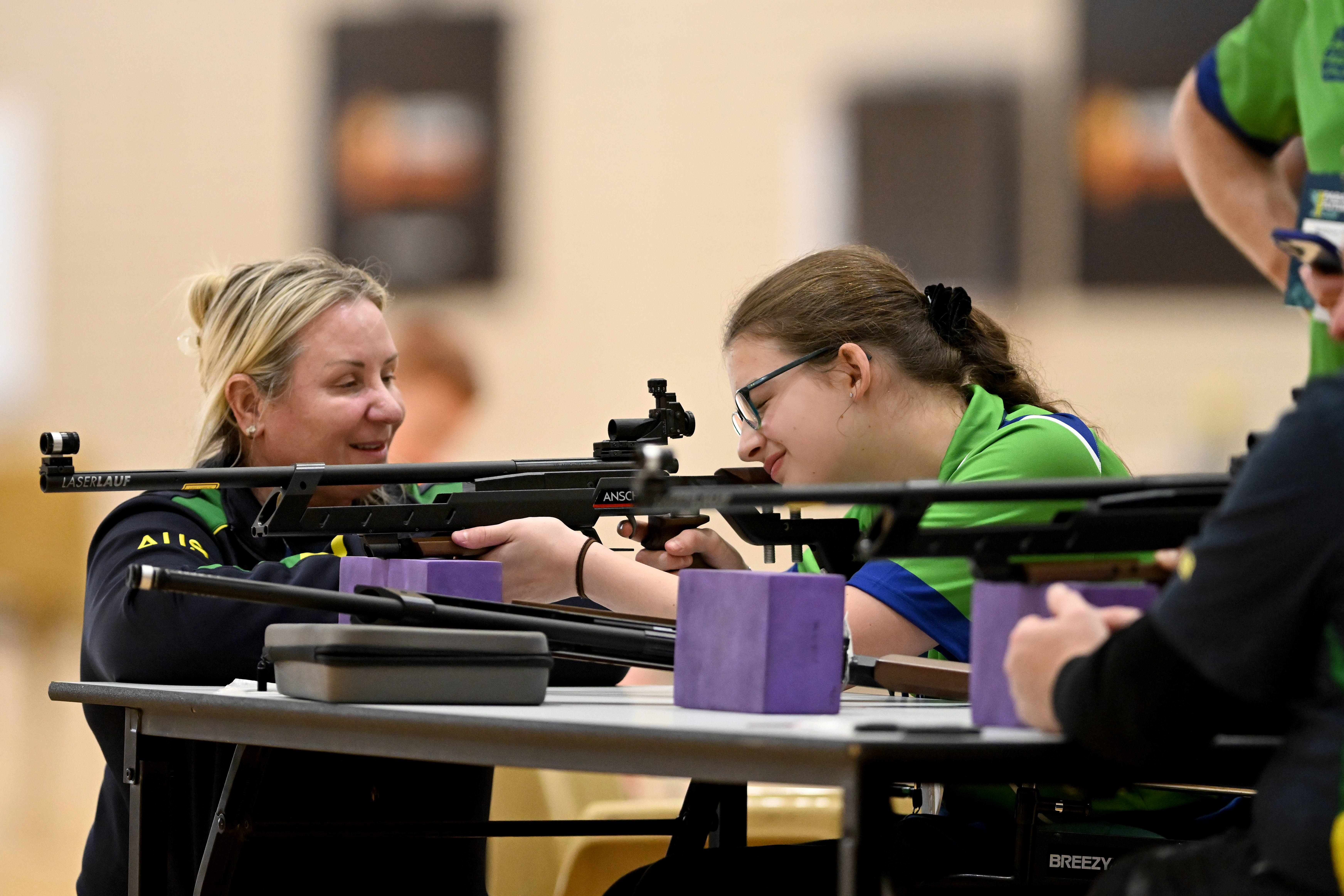
Images: Stephanie trying track for the first time (L) and rifle shooting (R) Image Credit: Jeff Crow/Paralympics Australia
“All of the teams were really supportive so if someone had a game, we’d all go and watch to cheer them on,” she said. “And because we were able to hang around together we all felt comfortable and supportive of each other. There was a wide range of disabilities, so you did not feel like you were the only one, which is the case the majority of the time.”
The Hobart swimmer took part in a variety of sports and learned much from the event’s eponymous champion.
“I really liked shooting. I was quite good at it, surprisingly. I did not think I would actually hit the targets, but I did.”
Earning an invitation back to Canberra for some shooting talent identification in November has cemented Stephanie’s ultimate sporting dream.
“My long-term goal is the 2032 Brisbane Paralympics as a swimmer ... or shooter maybe!” she said.
“It would mean the world to me. It would feel like I’ve finally been properly recognised.”
Written by Rob Shaw